
Embassy and Hideout
Two buildings about other players: agreements and intelligence.
The Embassy
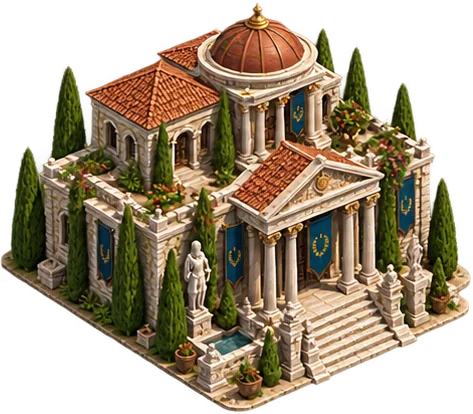 Embassy
The Embassy gives you the standing to make agreements with other players. Its level sets how many you may hold at once: the first permits two, and each level adds one. The Diplomacy screen opens with two figures: Embassy, the level of the Embassy that counts, and Commitments, the agreements you hold against the number that level allows. The agreements themselves are in the screen's Agreements section, on the In force, Offers to you and Your offers tabs.
Your empire builds the Embassy only once. While one of your cities has an Embassy standing, being built or waiting in the construction queue, you cannot start another in a different city: the building list of an empty plot still shows the Embassy, but closed, and says which of your cities has it. If you demolish that Embassy, you can build a new one elsewhere.
Agreements are mutual: if either side's capacity is full, no new agreement can be made. A player with no Embassy has no diplomacy at all — no alliance, no peace, no non-aggression.
A player on their own needs only a low level. If you are in an alliance, or holding agreements on several fronts at once, the capacity is a real limit.
The Embassy counts in an alliance too. If you lead one, your Embassy decides how many members it may hold; if you are a member, the level of your Embassy decides which office you can be given. More: Alliances.
The Embassy window
Clicking the Embassy in a city opens a window that starts with your diplomacy. The Commitments line shows the agreements you hold beside the number allowed; the green figure next to it says how many you could hold at once if this Embassy rose one level. Below it stand the number of agreements in force, the offers waiting for you and those awaiting an answer, and your alliance if you have one: its name, your office in it and its members. Agreements are not made in this window: Open Diplomacy takes you to the Diplomacy screen, and clicking the alliance's name opens its page.
Which Embassy counts? in the head is a reminder of the rule. If you have more than one Embassy, only one counts: the highest, and among those at the same level, the one in the city you founded first. The others are passive: their window says Passive at the top, with the city of the Embassy that counts just below. Raising a passive Embassy adds nothing to your commitments until it passes the level of the one that counts, and until then the green figure is not shown. Demolishing it leaves your diplomacy as it is and frees the plot for another building.
The building block at the bottom of the window shows the upgrade and the lowering; a new level counts once the work is done. A smaller Embassy breaks no agreement in force. But if your limit falls below the agreements you hold, you cannot make a new one until there is room again.
The Hideout
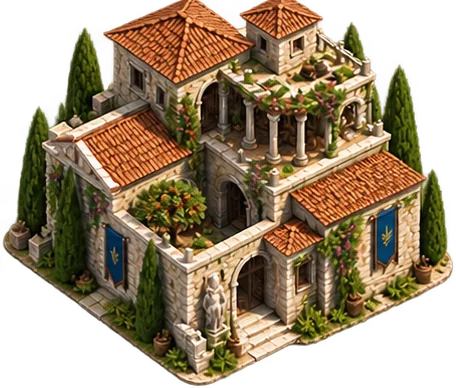 Hideout
It does two things: it houses spies, and it protects your city against enemy spies. Both grow with its level; the figures for every level are in the Building Table.
The number of spies it houses is a limit: spies at home, on a mission and in training all count. If you lower the Hideout, the spies who no longer fit join the free citizens.
If you have a neighbour on your border, the Hideout is a defensive investment not to neglect, even if it is no Wall. What spies can look at and how an operation turns out: Espionage.
The figures come from the game's own content. Balance updates can move some numbers; the rules themselves are as written here.