
Every building
What each building is for, in short. The info button in the production windows shows these descriptions too.
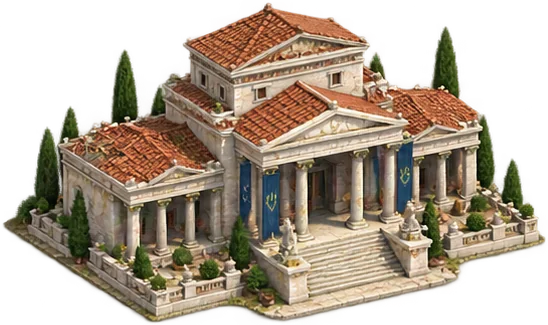
Town Hall
The heart of your city. Its level sets how many citizens the city can house; the population stops growing when it reaches that ceiling. Nearly every building asks for a Town Hall level, so it is usually the first building you raise. More: Town Hall and Tavern.
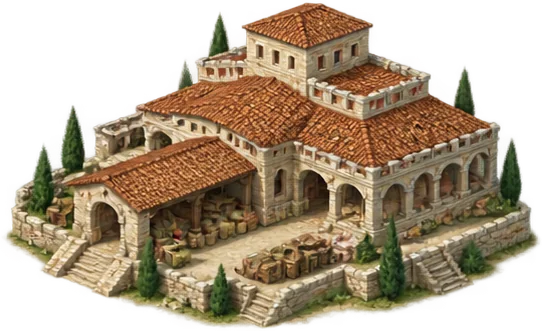
Warehouse
Keeps your resources: all of them share one common store, and the Warehouse sets how much that store holds; once it is full, no resource rises any further. It also protects part of the stock; a raider cannot touch the protected part. A city can have more than one Warehouse. More: Warehouse.
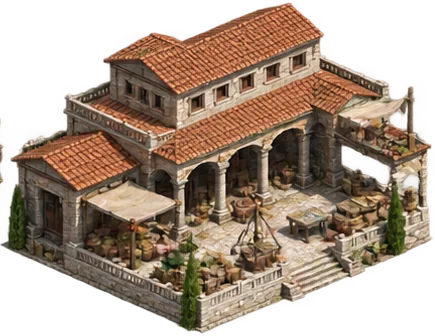
Trading Post
Connects your city to the Market; you buy and sell resources. Its level sets how far your offers reach and how far away the offers you can see may be. It does not carry goods itself: buying overseas needs a Port and transport ships. More: Trading Post.
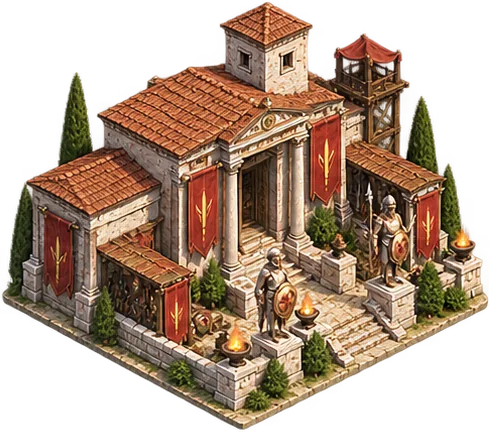
Barracks
Your whole land army is trained here. Each unit asks for a Barracks level, and the level speeds up training. It works in a city under siege too: a soldier you train there joins the garrison in the next round. More: Military buildings.
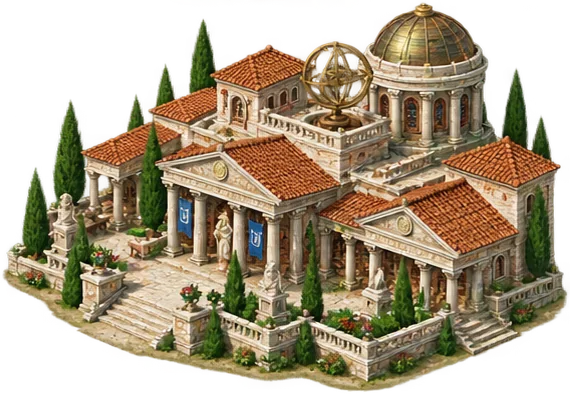
Academy
Where scholars work. Its level sets how many scholars you can assign; scholars produce Knowledge, and Knowledge is spent on research. A scholar is an expensive citizen compared with a worker. More: Academy.
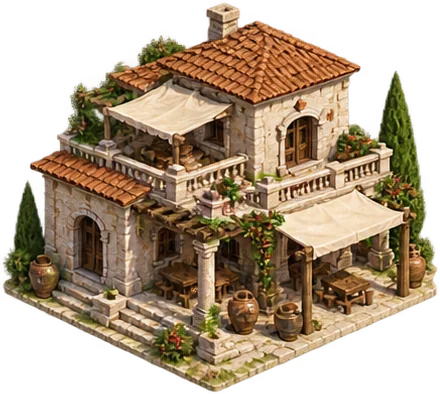
Tavern
Its one job is to serve grapes to your citizens; grapes give happiness, and happiness grows the population. You choose how much it serves an hour; every level raises the grapes it can serve and the happiness it brings when it serves them all. Pressing it takes you inside; you set the service from the bar under the room. More: Town Hall and Tavern.
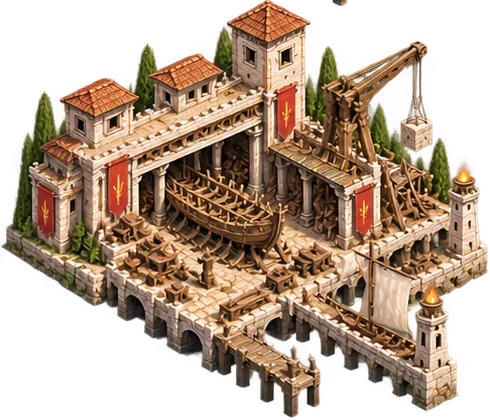
Port
Stands on the trade harbour plot and builds the Transport Galley; your army and your resources cross the sea in these ships. Its level speeds up shipbuilding and sets how fast shipments are loaded. A high Port also builds the Holkas. More: Military buildings.
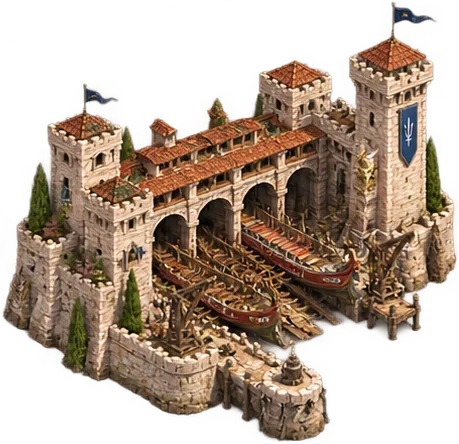
War Harbour
Where warships are built; it stands on the war harbour plot. An army going to another island boards here before it sets out, so a city without a War Harbour cannot send an army overseas. Its level speeds up shipbuilding and boarding. More: Military buildings.
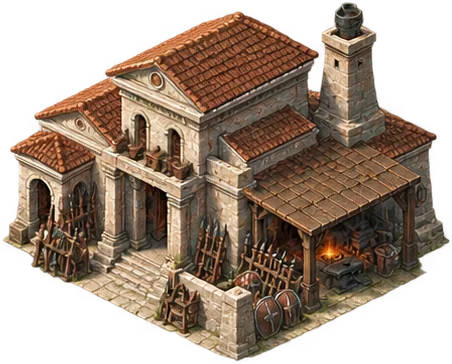
Arsenal
Makes no units; it raises the attack and defence of your soldiers, siege engines and warships; support units are not equipped. The upgrade is yours: you pay once and it applies to the armies of all your cities. The equipment level cannot pass the Arsenal's level. In defence it also produces arrows, sling stones and javelins. More: Military buildings.
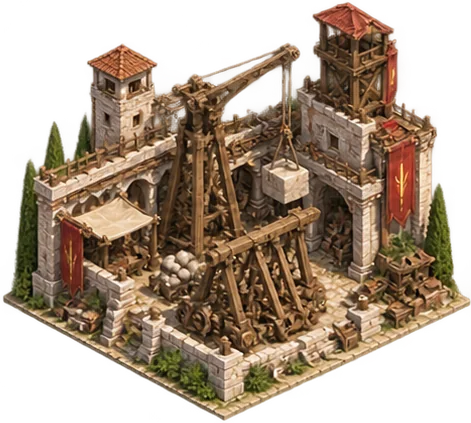
Siege Workshop
Siege engines, the Mechanikos and the Load Cart are built here. Each engine asks for a workshop level, and the level speeds up building. When your city is besieged it also produces shot for the engines in the field. More: Military buildings.
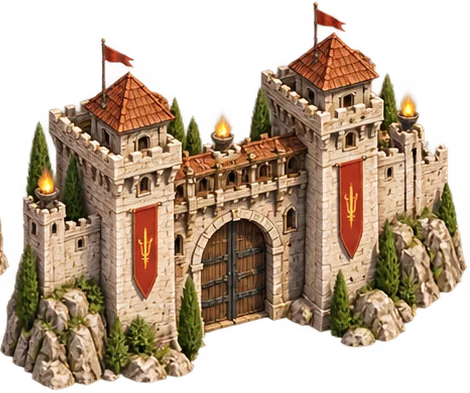
City Wall
The only defensive structure in the game; it stands on its own plot. While it stands, no enemy who fights hand to hand can reach your front line or your ranged line, and your defending soldiers stay under cover. Only siege engines can bring the wall down. More: City Wall.
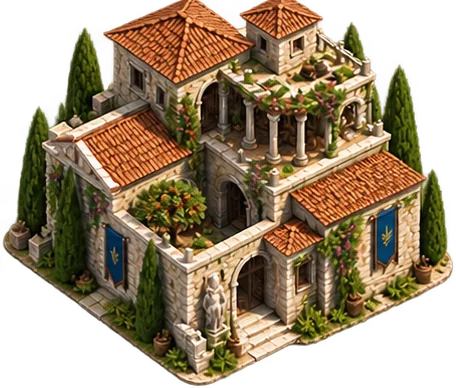
Hideout
Where spies are trained. Its level sets how many spies you can keep, and it makes enemy operations against your city harder. A spy is the only way to learn an enemy's garrison, wall and stores before you attack. More: Embassy and Hideout.
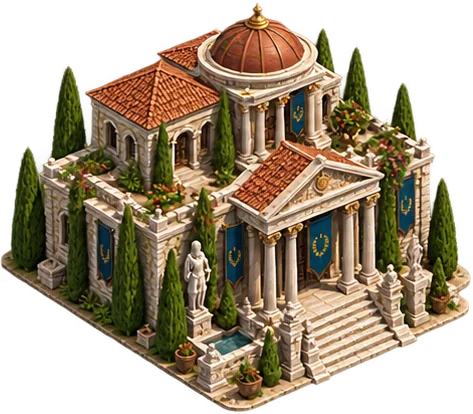
Embassy
The condition for making agreements with other players and for belonging to an alliance. Your empire builds it only once. Its level sets how many agreements you can keep at once. More: Embassy and Hideout.
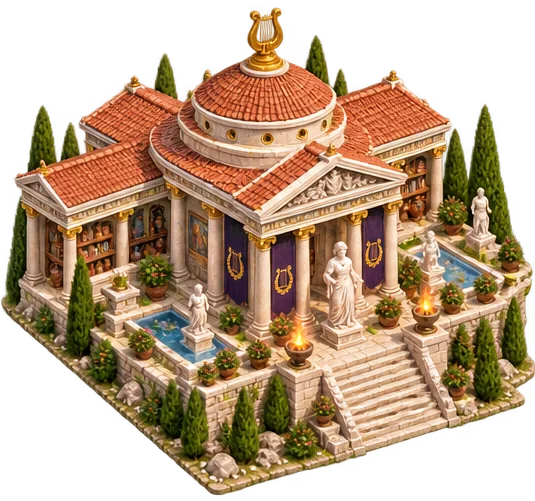
Mouseion
The museum that exhibits objects sent from other players' cities. Each level is one more cultural treaty, and every object a treaty in force has brought adds satisfaction to the city. More: The Mouseion and cultural treaties.
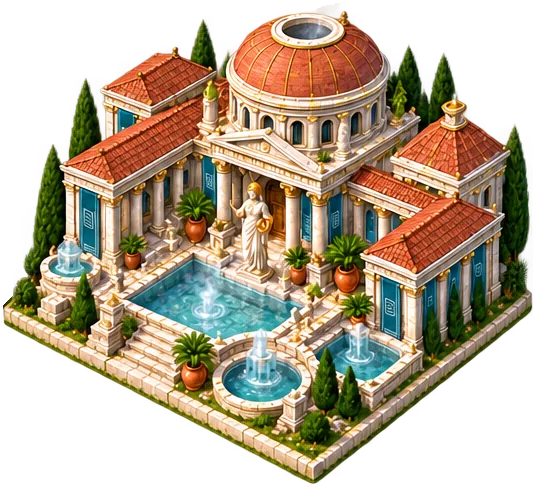
Bathhouse
Gives satisfaction to growing cities. Its furnace burns wood from the Warehouse every hour; while it burns, each level gives the people a little more satisfaction, and when the wood falls short, so does the satisfaction. It does not meet what the people expect of the Tavern, nor does it end a famine. More: Needs and Revolt.
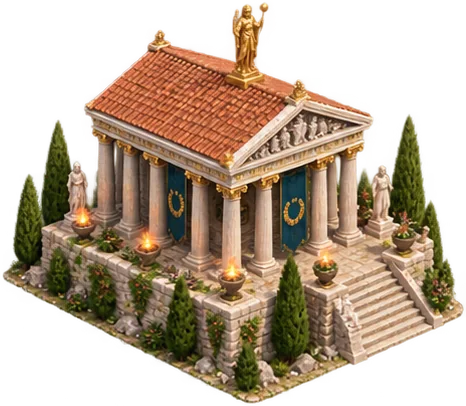
Temple
Where your city serves a patron god; it stands on its own plot. You choose a god and assign idle citizens as priests; the god's effect works as far as the priests' roster is filled. More: Temple and Monument.
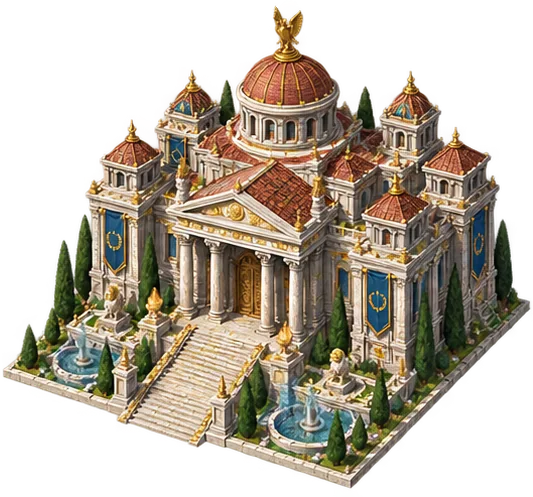
Palace
Stands only in your capital and is the door to expansion: its level sets how many colonies you can found. Your empire's form of government is chosen here too. Its first level needs the Organised Labour research and its second Standard Measures; the third level and every level after it need no new research. More: Palace and Governor's Residence.
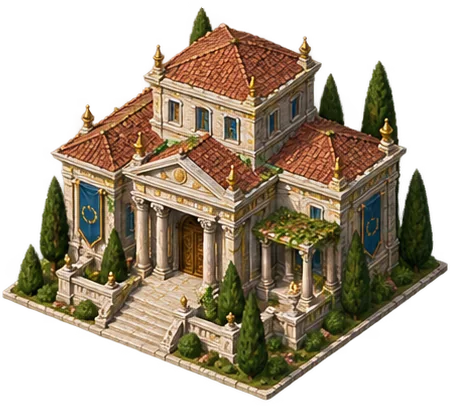
Governor's Residence
Stands only in colonies. To found a new colony, every colony you have needs a Governor's Residence at a high enough level; expansion asks you to grow all your colonies together. More: Palace and Governor's Residence.
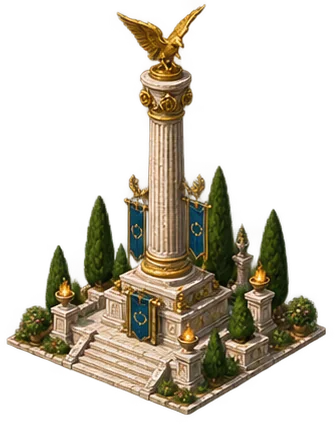
Monument
The game's only single-level building; it stands on its own plinth. The moment it is finished, the game puts one of the standard monuments on its plinth and it starts giving your city happiness; you can change the look later. You can also commission your own Monument with Seals. More: Temple and Monument.
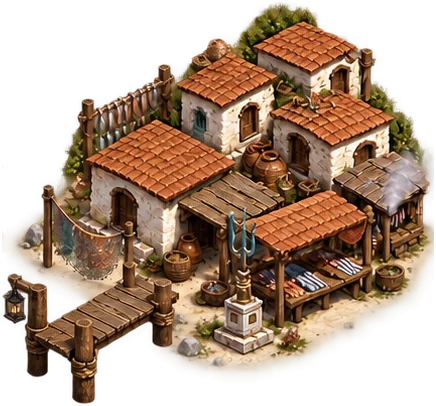
Fishermen's Shelter
Stands in the sandy cove in the south-west of the city, on ground of its own; it takes no land plot from you. Pressing it opens no window: you walk out onto the jetty and cast a line. The fish you keep go into the shelter's bucket, and the Tavern serves them and they give happiness. Its level raises the casts that can save up, the bucket and the fish the Tavern can serve. More: Fishing.
The figures come from the game's own content. Balance updates can move some numbers; the rules themselves are as written here.